Corpus
1,627 screenplays scraped from Script Slug using a modified version of the Movie Script Database pipeline (Saha, 2021). Final drafts only, 1980 to 2025. Titles and release years cross-checked against TMDb and IMDb.
Parsing
Each script is a PDF. Some are clean. Some are scans of scans. I pulled text out two ways: pypdf first, ocrmypdf for the ones that fought back. From there a rule-based parser from Ramakrishna et al. (2017) separates dialogue from action and character names from slug lines, so the script can be read by a machine the way it’s read by a person. I patched two edge cases the original parser misses.
Sentiment
A RoBERTa-based sentiment model reads each script in twenty overlapping windows scaled to its length. (I tried various window sizes before settling on this one.)Each window gets a signed score: positive class probability minus negative. String the scores together and you get the arc. Each script is z-scored within itself, so a quiet drama and a loud thriller sit on the same axis. The approach extends Reagan et al. (2016), who did this for 1,327 books in Project Gutenberg.
Clustering
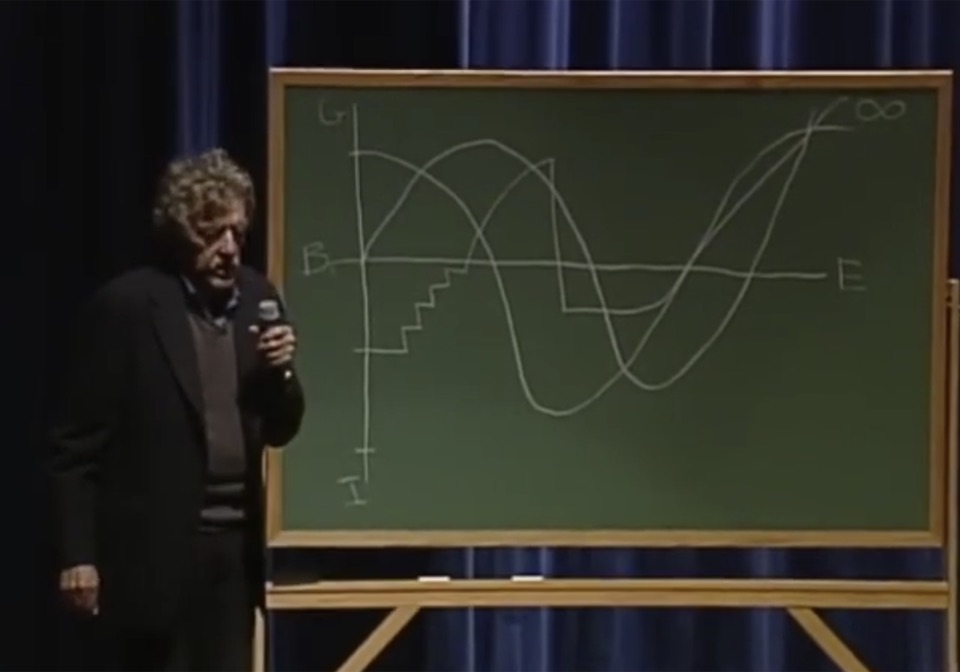
First I tried sorting the arcs into hard buckets. Ward’s hierarchical clustering, HDBSCAN, DP-GMM. The arcs refused. UMAP showed they sit on a smooth continuum, not in clean groups. So instead of forcing them into boxes, I used Archetypal Analysis. It finds the six most extreme shapes in the corpus and lets every film sit on a mixture of them. Most films are blends. A few are pure. The six archetypes map onto the shapes Reagan et al. found in literary fiction: Oedipus, Icarus, Man in a Hole, Tragedy, Rags to Riches, Cinderella.
Turning points
Local highs and lows on a Savitzky-Golay smoothed version of the arc, filtered by prominence (threshold 0.5, tested across 0.3 to 0.7). Small wobbles get filtered out. Only the moments where the story visibly changes its mind survive. The notes on each turn are mine, written by hand, anchored to the page they happen on.
Caveats
Sentiment is not plot. A war film can read positive on the page if the dialogue is hopeful. These shapes are the emotional rhythm of the writing. Not the events.